









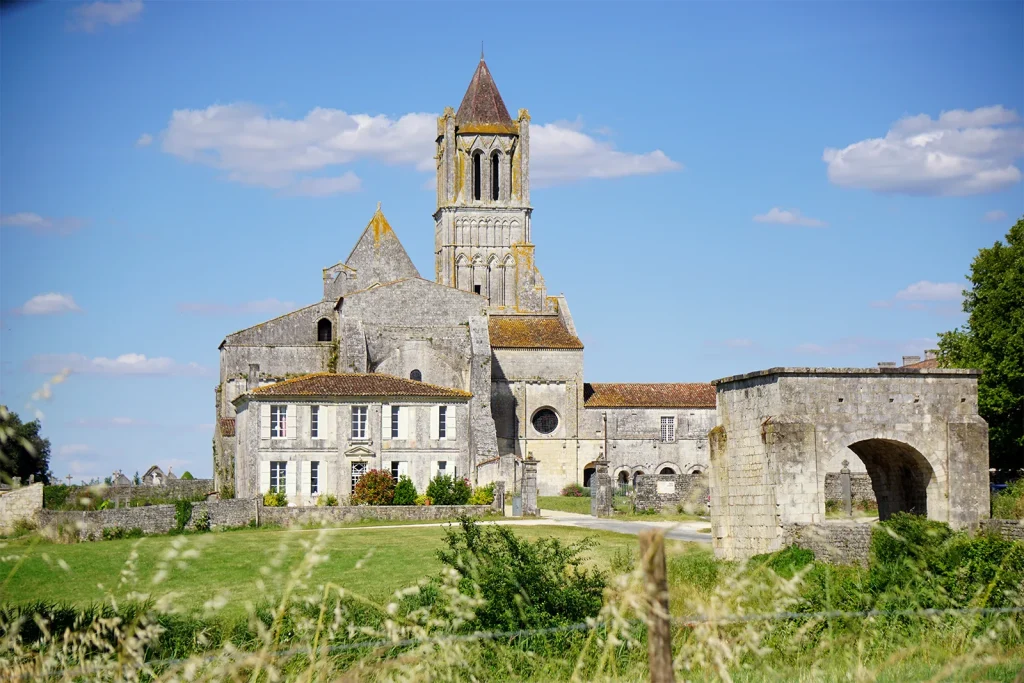
Nestled in a verdant setting, Sablonceaux Abbey is one of the jewels of Royan Atlantique's heritage. This thousand-year-old abbey offers a unique journey through the centuries and its architecture. A new cultural program allows visitors to (re)discover this exceptional place from a fresh perspective, blending history and modernity.
A thousand-year-old abbey
It was in 1136 that William Established in the “Baconais forest”, this high place of prayer for the regular canons of Saint Augustine then possessed a vast domain made up of various goods, lands, woods, moors, marshes, saline waters and animals.
Canons regular are priests living in community under the rule of Saint Augustine. They preach, teach theology and education to young people. Their main mission is in particular to accompany the faithful in their spiritual life, from the cradle to the grave, in the parishes dependent on the abbey.
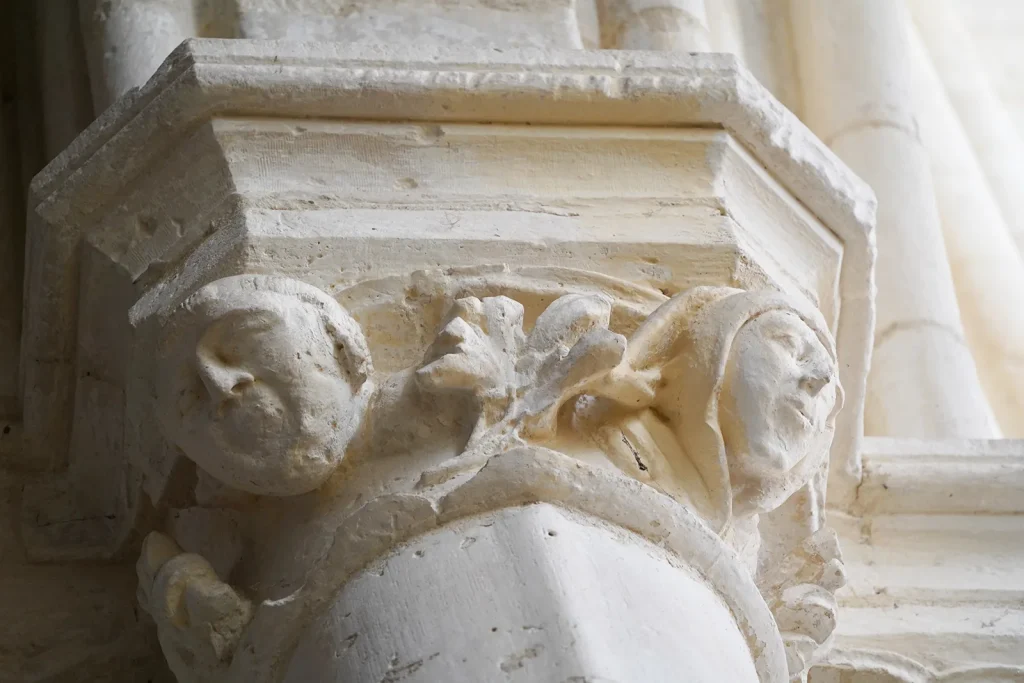
A turbulent history
The Hundred Years' War (1337-1453) and the Wars of Religion (1562-1598) severely damaged the abbey. By the 17th century , the buildings were indeed dilapidated. Furthermore, the community was reformed under the authority of Chancelade Abbey, located in the Dordogne region. Sablonceaux Abbey was thus placed under the commendatory system. The abbot was no longer a monk but a high-ranking Church official appointed by the king.
During the Revolution, the 11 remaining canons were driven out and the abbey became national property. Charles Le Moine, commissioner of the navy in Rochefort, was the first to buy the abbey. Unfortunately, the Le Moine family is unable to maintain the place. Some buildings are then demolished. They ultimately become quarries which are used to build surrounding houses. In 1907, the church was classified as a Historic Monument.
Classified as a Historic Monument, Sablonceaux Abbey reveals all the history of past centuries.
Then, in 1912, Doctor Martz bought the abbey. He transformed the place into a health spa and had some work carried out. During the Second World War, many single children were taken in by the sister of the new owner of the abbey, Mademoiselle Cornardeau. After the war, daily life resumed and the abbey became a dairy (“Le Vieux Porche” Camembert) then an agricultural business.
From 1963 to 1983, André Malraux initiated the restoration of the abbey church. In 1987, the diocese of La Rochelle and Saintes, which owned the site, established the Chemin Neuf community on the site. It thus restores to the abbey its vocation as a place of life and spirituality.
Visits to Sablonceaux Abbey
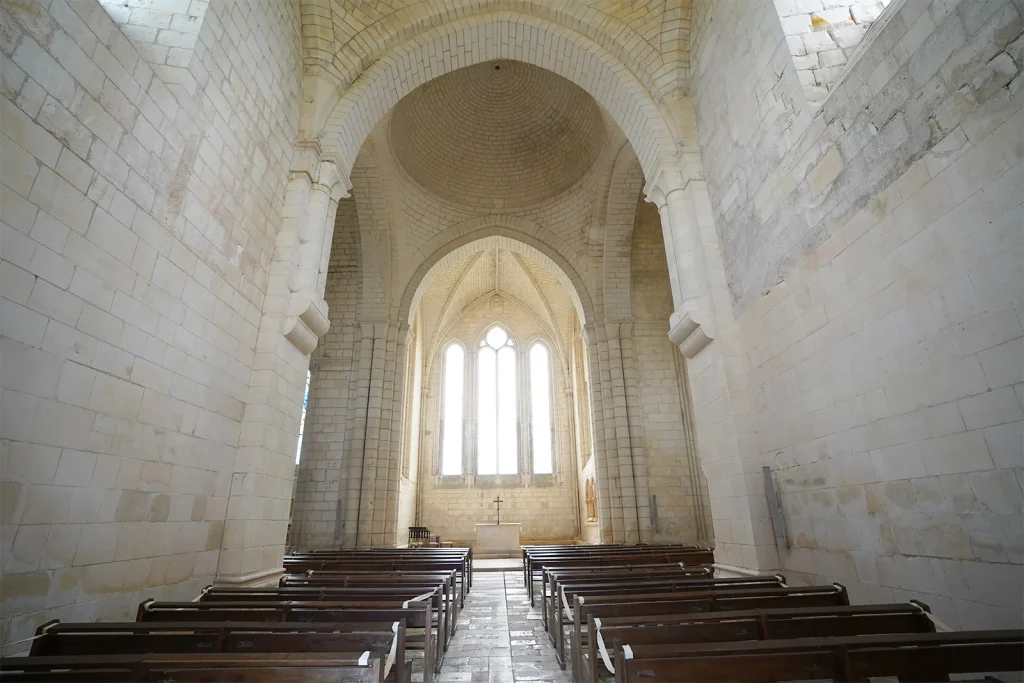
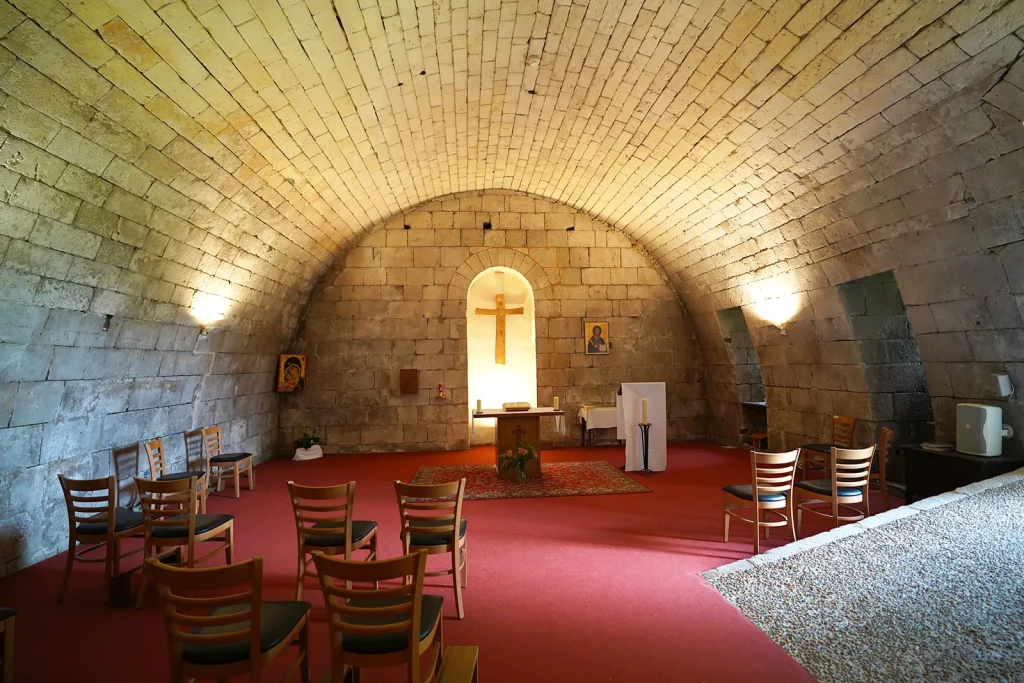
Sablonceaux Abbey has survived the centuries, undergoing various modifications and restorations. As a result, several architectural styles can be found throughout its buildings. The abbey church, dedicated to Our Lady of the Assumption, is distinguished by its understated Romanesque architecture , characterized by its balanced proportions and domes. Around the church, the conventual buildings – chapter house, dormitory, and refectory – structured the lives of the Augustinian canons regular.
Ultimately, it stands as a living testament to medieval religious architecture and monastic life of the period. Today, a portion of it can be visited freely. This includes the 12th-century abbey church, the cloister, the chapter house, and the exterior grounds.
Opening times for Sablonceaux Abbey:
- in winter: 9 a.m. to 18 p.m.
- summer: 9 a.m. to 21 p.m.

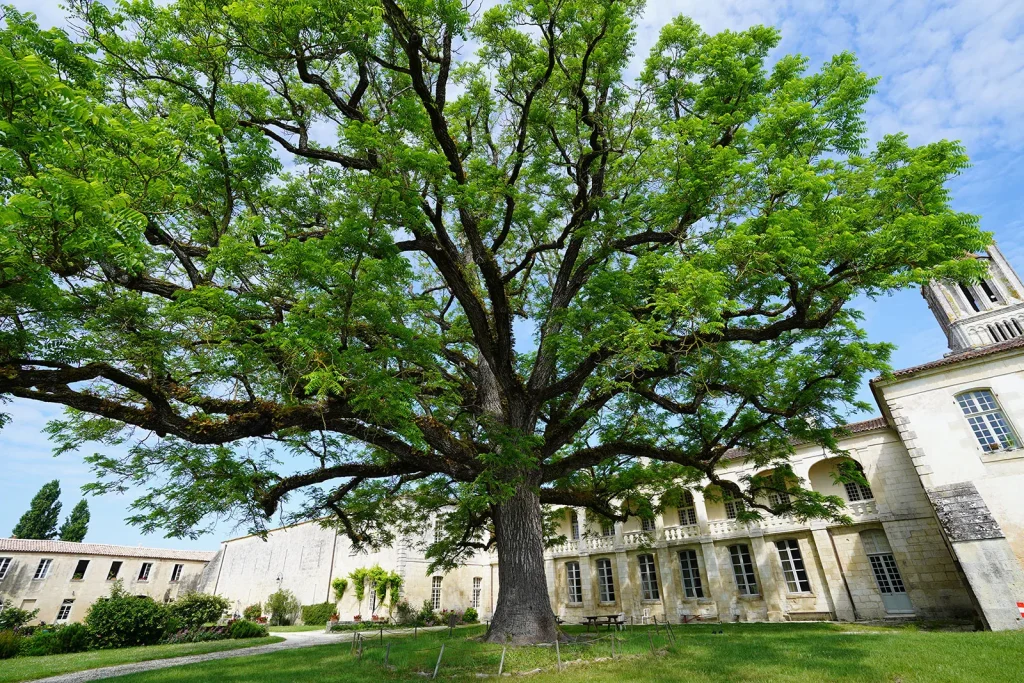
To delve deeper into the history and uncover the secrets of the abbey, expert guides lead guided tours. These tours include the discovery of private buildings and spaces such as the 13th-century granary, the 18th-century abbot's residence, and the 150-year-old American walnut tree. They offer a comprehensive view of the abbey's rich heritage.
Whether for a self-guided stroll or an in-depth guided tour, the abbey reveals its treasures and secrets to those who take the time to explore it.
The abbey's cultural program from Sablonceaux
Since 2024, Sablonceaux Abbey has opened its doors, offering conferences, activities, and events. A rich and varied program highlights this historically significant site . Visitors can take advantage of the abbey's cultural events to enjoy memorable experiences that blend encounters and shared moments.
Among the highlights is the event "Sablonceaux Abbey in Lights ". For 20 minutes, the history of the abbey is told in images and music through a projection on the facades of the church and the chapter house.
Then, in early October, we step back in time for a grand medieval festival within the abbey grounds. We rediscover ancient skills and the products of local artisans in a medieval atmosphere. The program includes: a craft market, workshops, demonstrations and activities themed around the Middle Ages for adults and children; concerts, street performances, and a medieval banquet.