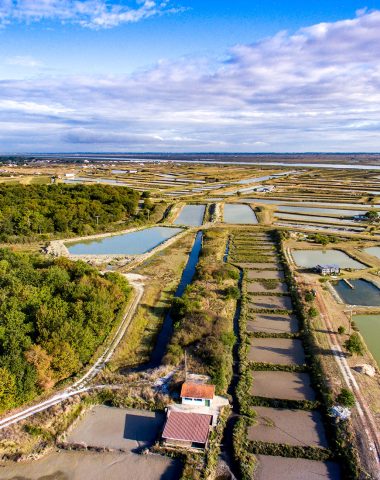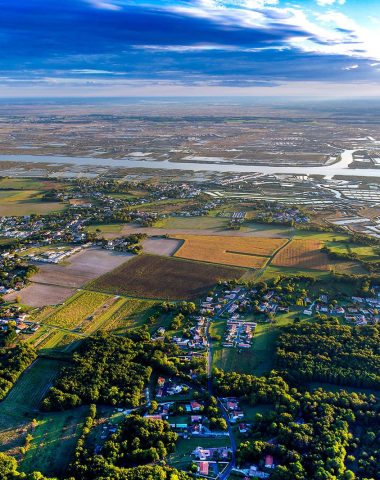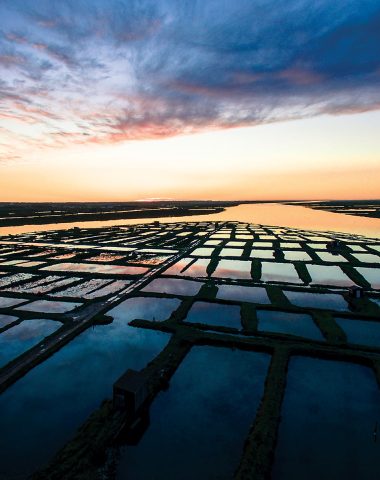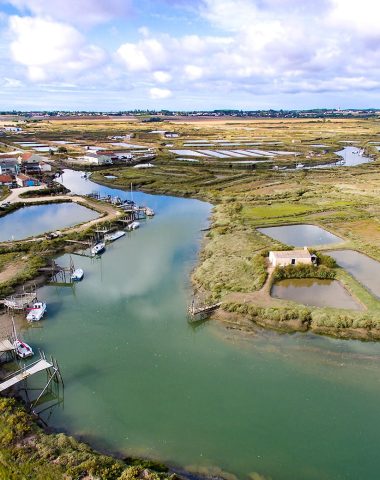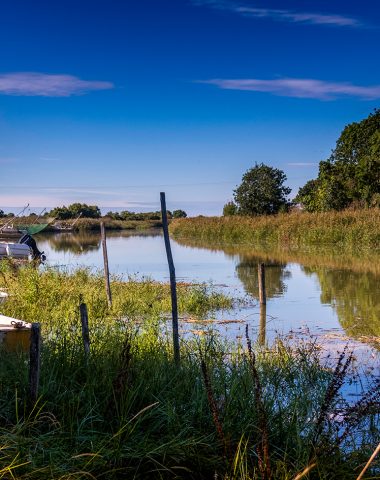






Nestled in the heart of the Arvert Peninsula marshes, Mornac-sur-Seudre reveals itself to those curious enough to visit. A small village with a dual character: oyster farming by tradition and craftsmanship by passion. Quite simply, one of the " Most Beautiful Villages of France® ".
A craft village overlooking the marshes
Mornac-sur-Seudre is a "Village of Stone & Water," as promised by the Charente-Maritime label. It's not easily discernible, whether from the Royan-Rochefort or Saujon - La Tremblade roads . You have to seek out one of the small roads winding through the marshes that leads there. Mornac is a village where you should take your time to absorb its atmosphere and the wisdom it has acquired over the centuries.
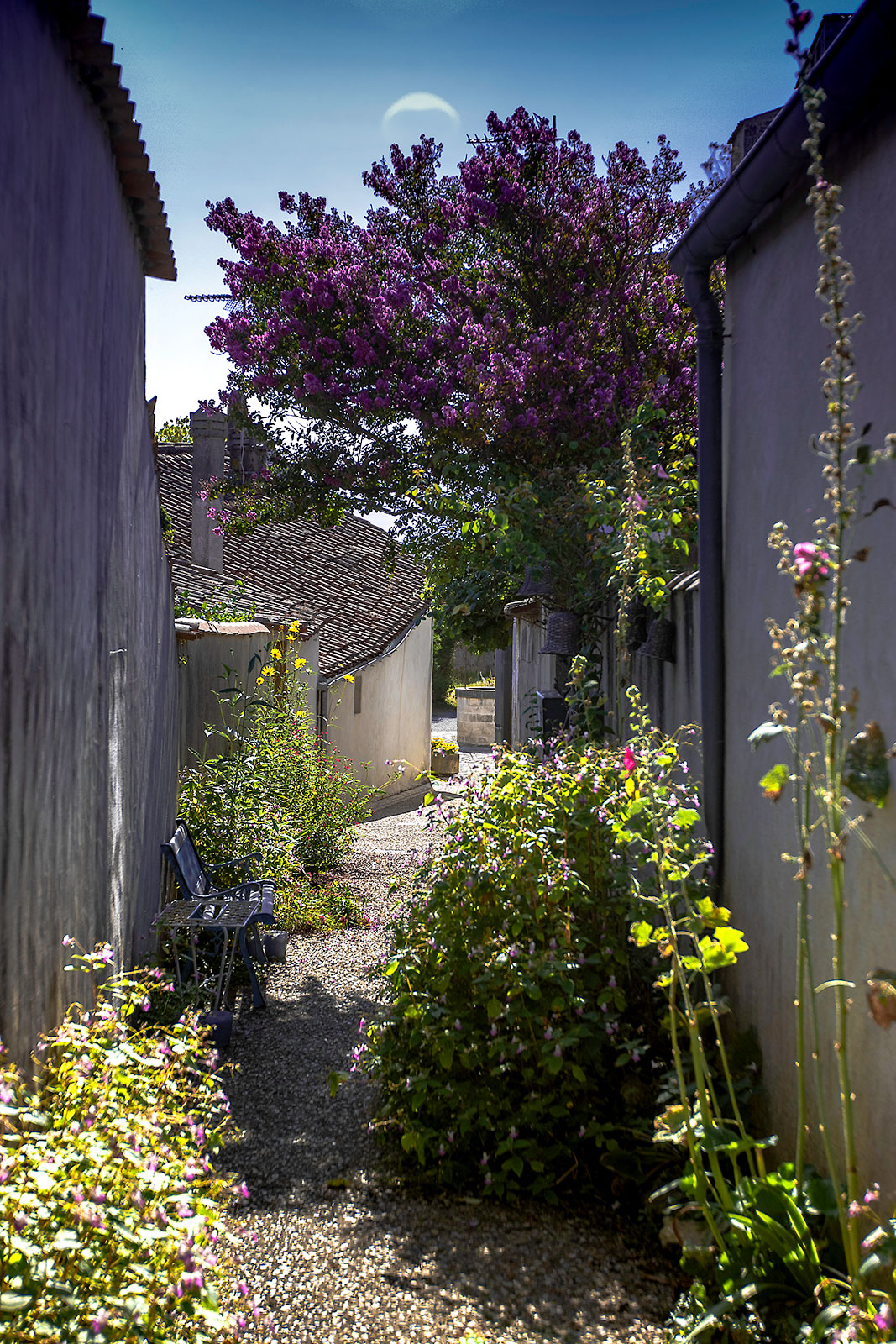
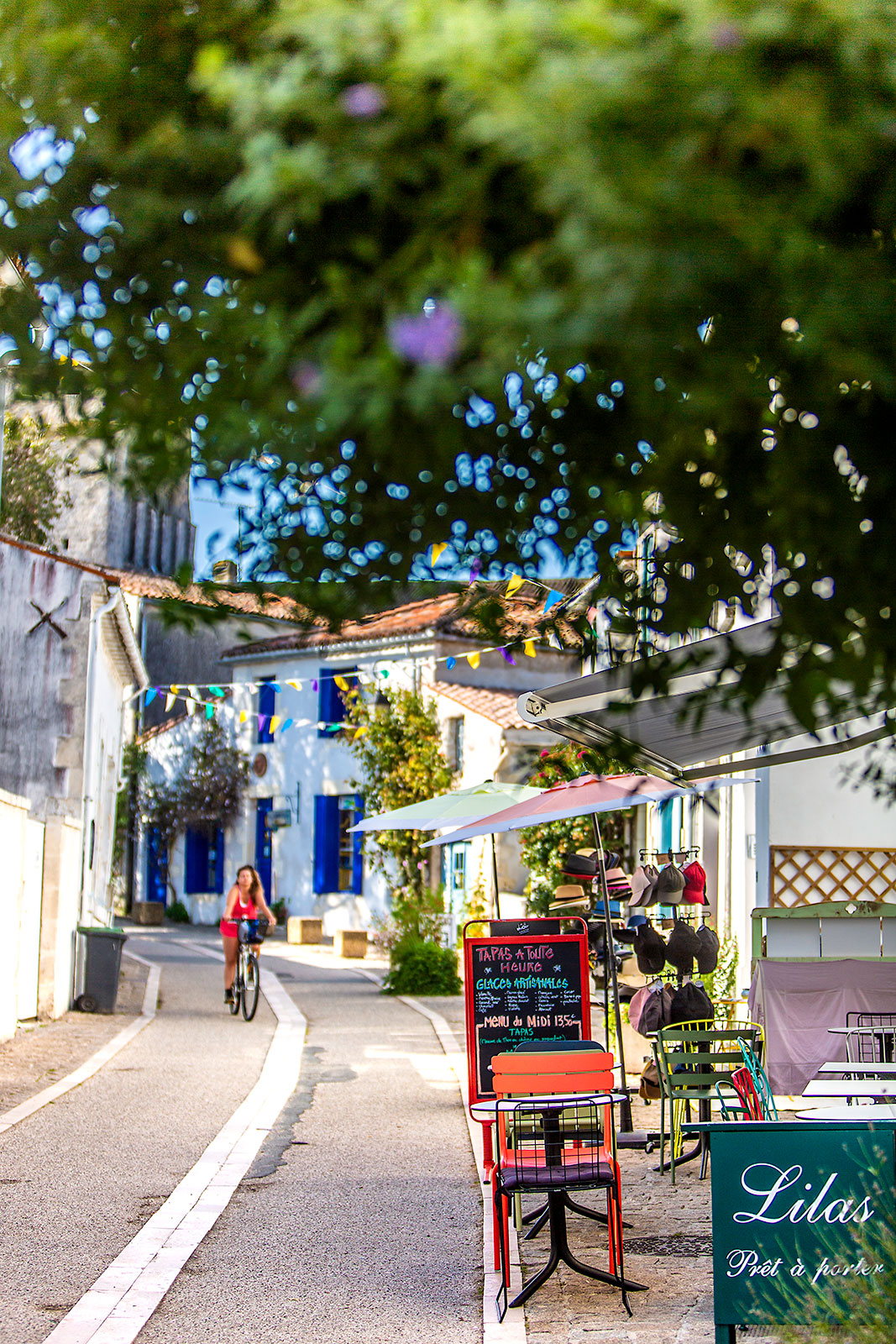
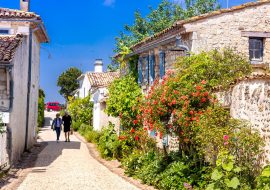
It's best explored on foot to savor every detail. It's also a place conducive to interaction, whether with locals generous with anecdotes, artisans showcasing their skills (earning it the "City and Crafts" label) , or even other visitors eager to share their favorite spots. Here, everything is on a human scale.
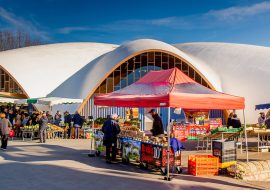
The village is discovered through the market square . The wooden-framed shelter, supported by stone pillars, is a welcoming place to meet people. There, one can take a break in the shade while waiting for those searching for hidden gems in the shops.
The terraced houses replace the old fortifications that protected the village in the Middle Ages. Unless you know the more confidential access points, you enter through the market halls and exit through the port, following the main street. However, don't hesitate to wander through the small streets and alleys of the old village. Don't be fooled by the village's small size; you can get lost there! This winding part of Mornac is called the "Arab quarter." This nickname is due to the many narrow, winding streets that the village's sailors compared to the medinas discovered in North Africa during their sea expeditions.
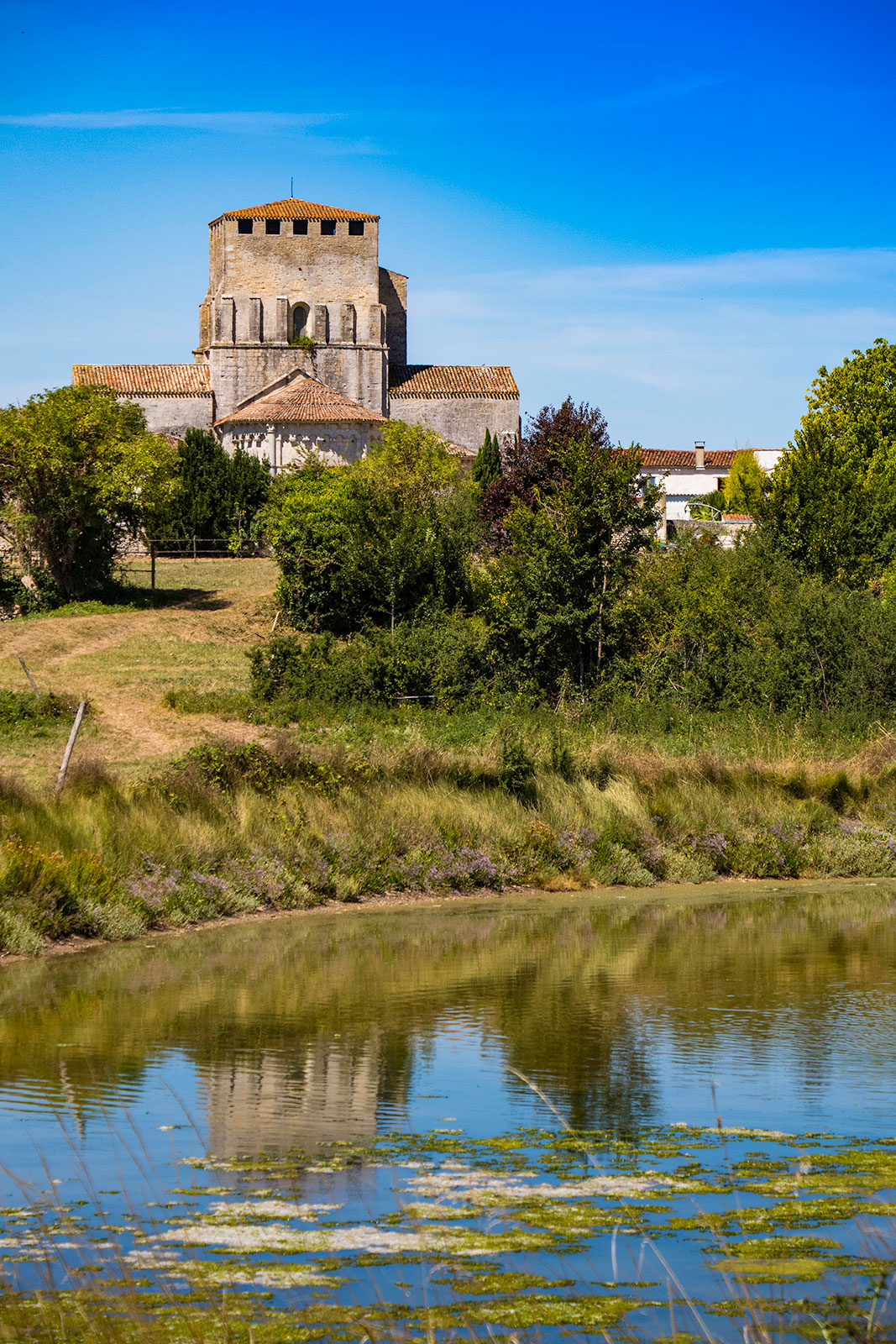
St. Peter's Church
It overlooks the village from its fortified bell tower. Unique in many ways, the Romanesque building houses a stoup made from a genuine seashell. To the side, one reaches the small, secluded garden at the apse. Stone sarcophagi (Merovingian or Carolingian, depending on the source) bear witness to the archaeological excavations carried out at the church. Mornac has many stories, but the fire of August 2, 1943, left its mark on the village's identity. Indeed, the bell tower hadn't always looked as it did. It had the more traditional shape of a spire until it was struck by lightning. Many young students came to Mornac-sur-Seudre to participate in the clearing and subsequent excavations. Charmed by the local atmosphere, many stayed and opened the village's first craft workshops, some of which, like pottery and leatherwork, still exist today.
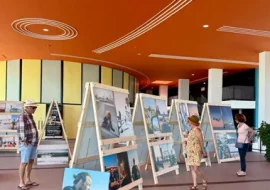
From the halls to the port, the houses of the former fishermen now host painters' galleries, craft workshops, small shops (clothing, jewellery, decorative objects, souvenirs, creations, local products, delicacies, etc.). A visit to the village can quickly turn into a shopping day!
An oyster port in the middle of the clear
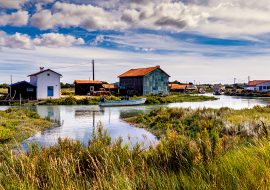
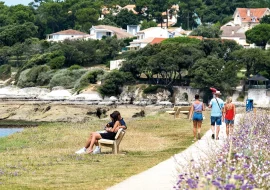
Leaving the village through the port, you'll find yourself in wide open spaces. Finally, you're facing the Seudre marsh. Your gaze stretches to the horizon (isn't that the Marennes church steeple in the distance?). The sea air tickles your nostrils. You settle down on one of the restaurant terraces in Mornac-sur-Seudre to enjoy this moment of peace. The only sound you can hear is the water rushing from the tidal mill. A simple structure made of tree trunks catches the eye: it's a reconstruction of a medieval fire.
The port comes alive with the arrival of the village children. All the local children learned to swim here. The sailboat "La Flèche" is in the harbor. This former fishing cutter and "Heritage Vessel" is joined during the "Voiles de Mornac" regatta , held during the spring tides of August, by other classic sailing vessels from the Atlantic coast.
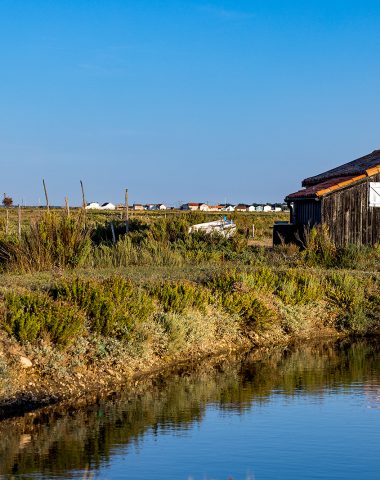
The harbor is lined with traditional, typical cabins, each painted in a different color. There's something for everyone. The small road along the Seudre River allows you to follow them all the way to the foot of the estuary. At the very end, you arrive at the "goule de l'ach'neau" ( the inlet of the sluice gate). You feel completely alone in the world. Everything is flat and level. And finally, it's time to say it: the name Mornac means "the calm waters."
Activities in Mornac-sur-seudre to discover the marsh and the village
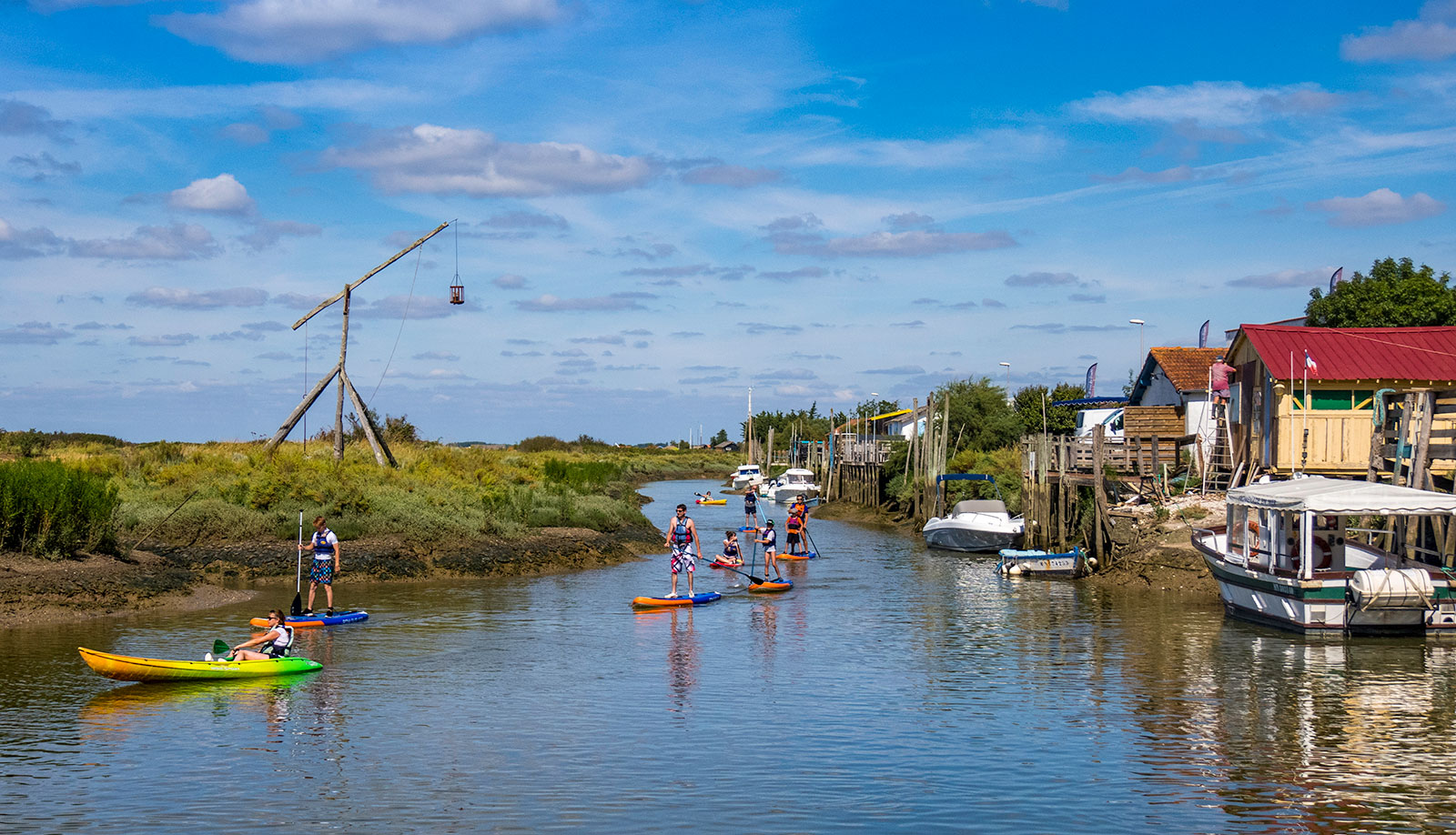
There's more than one way to experience this natural environment shaped by human hands. Cruise departures depend on the tide. Sometimes, there's simply no water in the harbor. But when the stars align, you can set off on a sea excursion for a complete change of scenery. Five minutes from boarding and you feel transported to another world. Kayaking puts you right in the heart of nature. A stop at the old salt worker's hut : you watch the heron take flight, you taste the samphire…
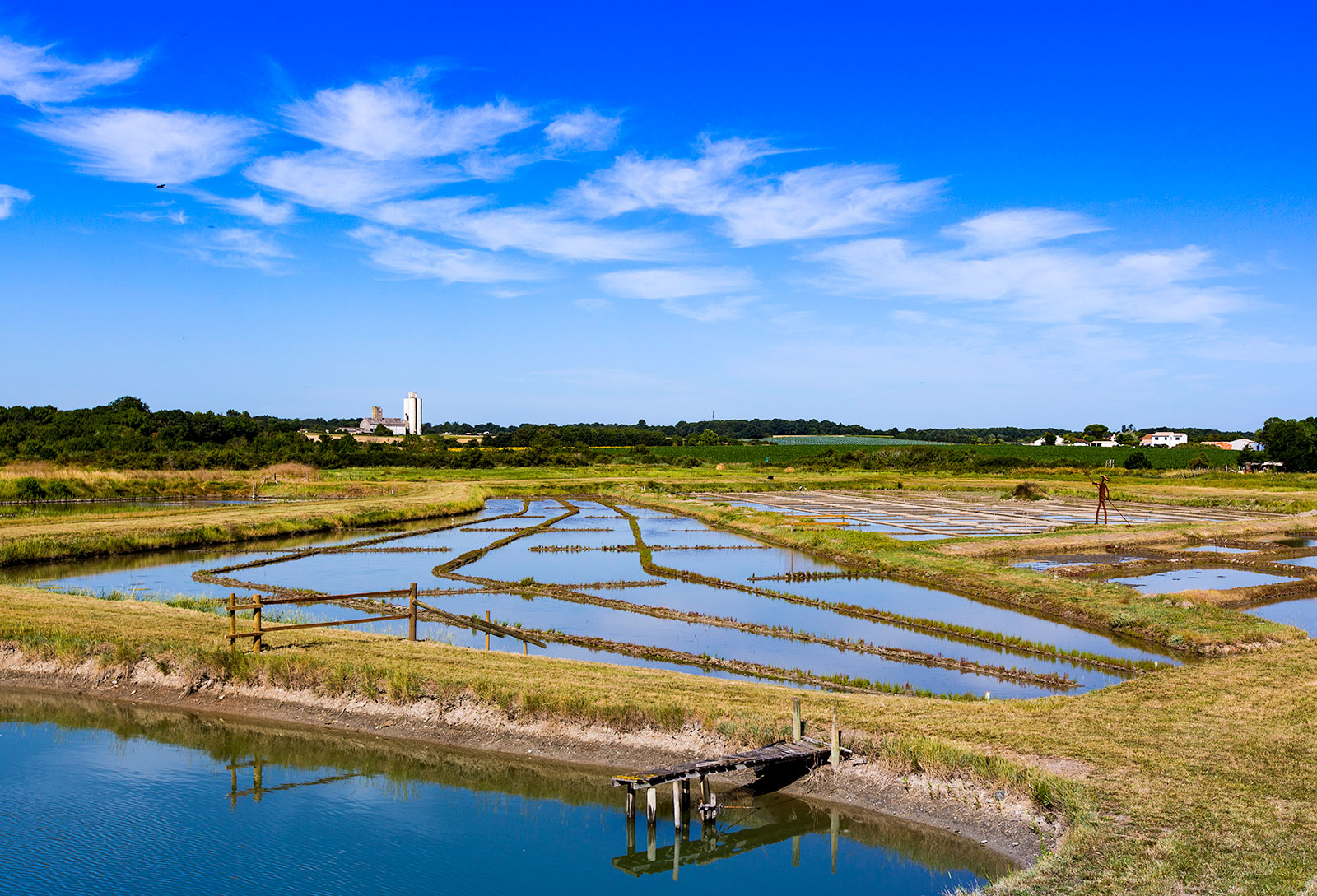
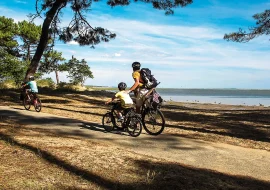
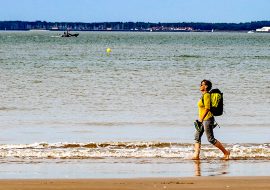
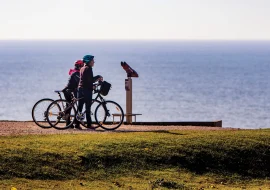
But not everyone has their sea legs. From the Chemin de la Corderie, you can take the marked Détours® loops , between April and October, along the pedestrianized dikes. Why not take advantage of the guided tours of the village offered during the season? Mornac and its marshes can also be explored by bike via the shared paths of the Chemins de la Seudre . If the ride seems too long, you can combine your outing with the Train des Mouettes (Seagull Train ). It's actually the perfect pace to leisurely appreciate the Seudre landscapes. Mornac-sur-Seudre is a stop on the tourist train. If the view of the salt marsh during the journey has piqued your curiosity, you can get off to attend the guided tour. You'll then learn all about the ancestral techniques used to harvest salt.
Our selection


Sentier Détours N°1 – Mornac-sur-Seudre
Level suitable for beginners

Sentier Détours N°2 – Mornac-sur-Seudre
Level suitable for beginners

Sentier Détours N°3 – Mornac-sur-Seudre
Level suitable for beginners


Stay in Mornac-sur-seudre

What to do and see in Mornac-sur-Seudre?
Why visit Mornac-sur-Seudre?
Mornac-sur-Seudre is listed among the Most Beautiful Villages of France®. The village charms visitors with its authenticity, preserved heritage, and natural setting between land and sea. It is an essential stop for discovering the Seudre estuary and the atmosphere of the oyster-farming villages.
Where to swim in Mornac-sur-Seudre?
There is no beach in Mornac-sur-Seudre. The village is located on the Seudre estuary. To swim, you have to go to the beaches on the nearby coast, such as those of Royan, Saint-Palais-sur-Mer, or La Palmyre, which are about fifteen kilometers away.
What activities are there to do in Mornac-sur-Seudre?
We take the time to stroll, to wander through the flower-filled alleyways and along the oyster port. We visit the artisans in the many small shops. We savor oysters in an atmosphere typical of the Seudre marshes.
Can we visit the marshes around Mornac-sur-Seudre?
The surrounding marshes can easily be explored on foot or by bike, either independently or on a guided tour thanks to marked trails and circuits. To observe the fauna, flora, and oyster farming landscapes more closely, take a kayak or paddleboard trip and venture into the various channels of the Seudre River.